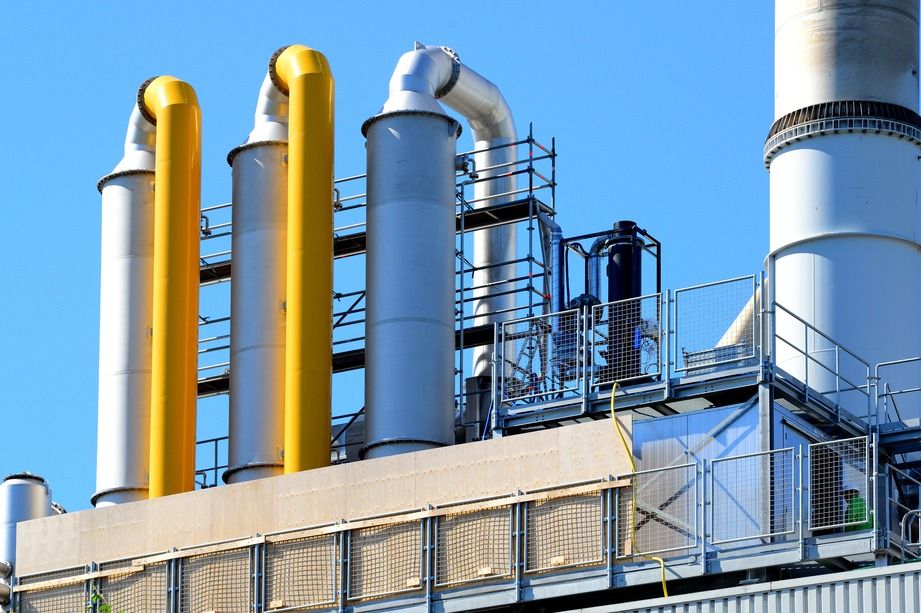
Carbon capture and storage (CCS) is moving from small pilot schemes to industrial-scale projects across the world. As facilities that span multiple temperature ranges, getting the insulation right is key to making CCS work well. Thankfully PAROC® and FOAMGLAS® insulation solutions are ideal for the wide temperature ranges and applications required, helping you to make the most of commercial opportunities within the growing sector.
Net zero drives growth for CCS
Global appetite and CCS investment are rising in both public and private terms. Initiatives from the European Commission target 50 million t of CO2 storage capacity every year by 2030 with matched capacity from 44 European oil and gas firms.
The GCCSI, Global Status of CCS 2025, reports 77 carbon capture, utilisation and storage (CCUS) sites in operation, 47 under construction, and over 700 in planning. According to the International Energy Agency (IEA), dedicated CO2 storage capacity could reach an impressive 620 million t CO2/yr by 2030.
Five European CCS projects are operational, including Norway’s Northern Lights open-access CCS hub and Brevik CCS cement plant. Currently, the UK leads the 2025 CCSA report with over 100 UK projects in development with the potential to capture over 77 million tpy of CO2.
Insulation matters throughout the CCS process
As CCS growth continues, it is critical for asset managers and investors to achieve the best outcomes – both for CO2 capture and whole-life operating costs. With such varied thermal requirements across the process, insulation specifications need to be fit for purpose at each stage. That means exploring insulation specifications early, during Front-End Engineering Design (FEED) stages. Getting the specification right the first time avoids costly rework later whilst building the long-term reliability that asset owners now expect.
PAROC® and FOAMGLAS® insulation solutions complement each other in CCS. PAROC® Stonewool insulation safely operates up to 700°C, performing brilliantly for tanks and pipework. While FOAMGLAS® cellular glass insulation works at temperatures from -265°C to 430°C.
The right insulation directly affects how well the CCS process runs, affecting running costs, carbon performance, safety, and the plant’s lifespan:
Boost energy efficiency
Suitable insulation lowers the energy needed to maintain process temperatures, which can improve running costs.
PAROC® Stonewool has low thermal conductivity and provides a robust thermal barrier to cut heat loss. FOAMGLAS® cellular glass closed-cell structure keeps its insulating value even in wet or humid conditions, ensuring moisture does not get in.
Protect process stability
PAROC® and FOAMGLAS® insulation holds its shape and thermal performance through repeated heating and cooling. Neither material shrinks, swells, or loses effectiveness, which helps maintain operating temperatures and reduce maintenance costs.
Minimise corrosion under insulation (CUI)
CUI is one of the costliest risks of any insulated plant, but one of the most preventable. Corrosion costs the world economy around US$2.2 trillion a year with around half of that cost in the oil, gas, and chemical sectors. Recent ExxonMobil data calculated CUI causes 40% to 60% of their total piping repair costs.
FOAMGLAS® cellular glass is an impermeable insulation material and will not absorb water, helping to mitigate corrosion of stainless steel even in the toughest environments. When applied according to guide specifications, it minimises water intrusion and retention. A real benefit during the CCS quenching, absorption, and regeneration stages.
PAROC® WR products boast an average water absorption that is over 10 x better1 than the requirements when tested in compliance with EN1609 and EN13472/24h. This best-in-class water repellent performance helps to form a reliable moisture barrier for ambient and hot pipework, vessels and tanks.
Enhance personnel protection
Both PAROC® and FOAMGLAS®, when specified to standard reference thicknesses, keep external surface temperatures within safe touch limits.
Long-term durability
Supposing proper installation and maintenance, PAROC® Stonewool is expected to last for the lifetime of the plant. While FOAMGLAS® is fully inorganic, so it does not age, rot, or break down over time. Together, these insulation solutions help cut replacement costs for whole-life cost-effectiveness.
Learn more about CCS insulation solutions, including specification guidance and product information.
Note
1. This data is based on an independent third-party comparison of products from the most important mineral wool manufacturers, which was carried out by Eurofins Lab 19036 on 16 August 2019.